robotic assembly of FAST plates
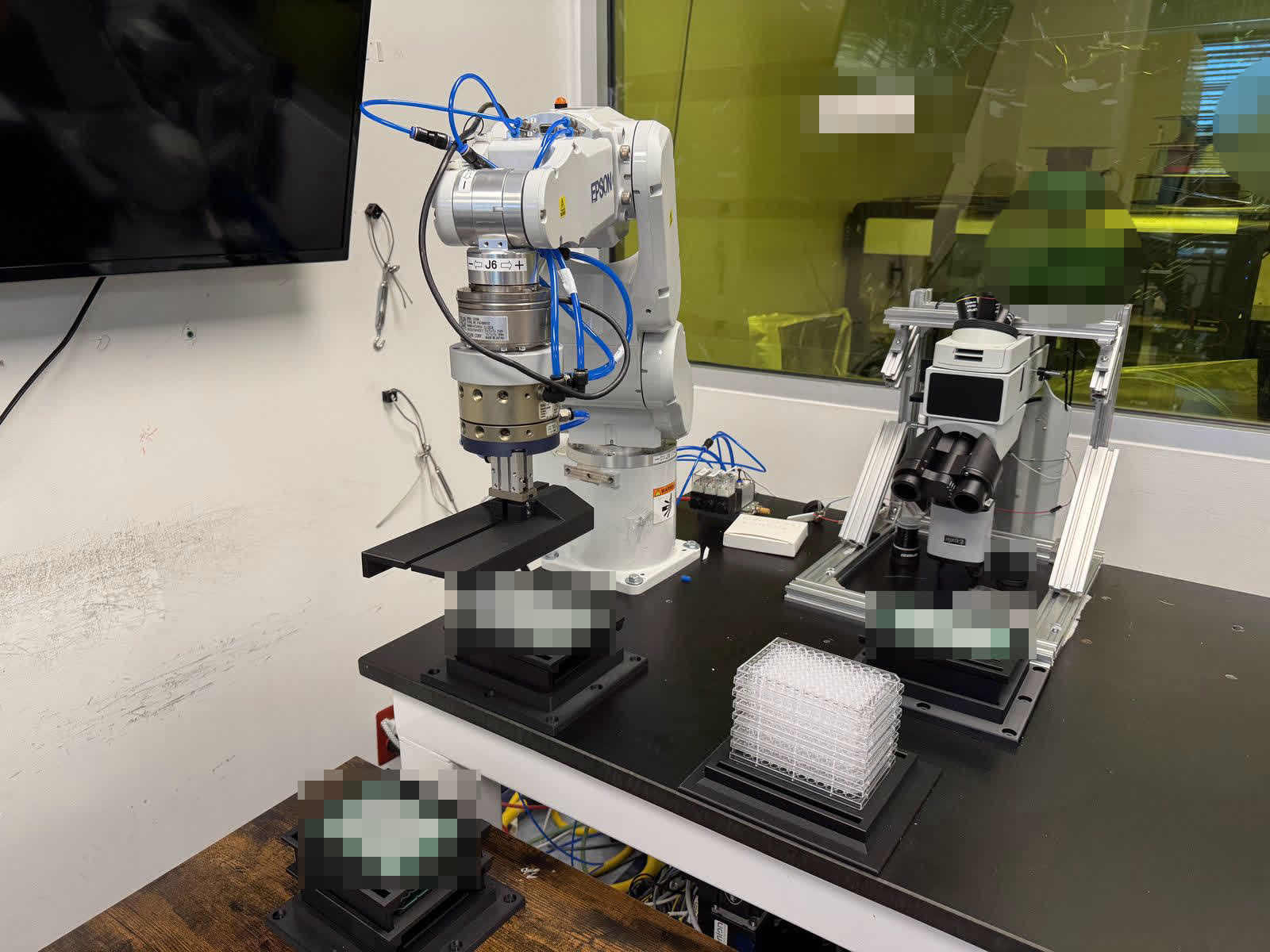
- My contribution
- Designed the station layout and 3D-printed fixtures, wired the clamps, and wrote the robot's assembly sequence.
- Assembly
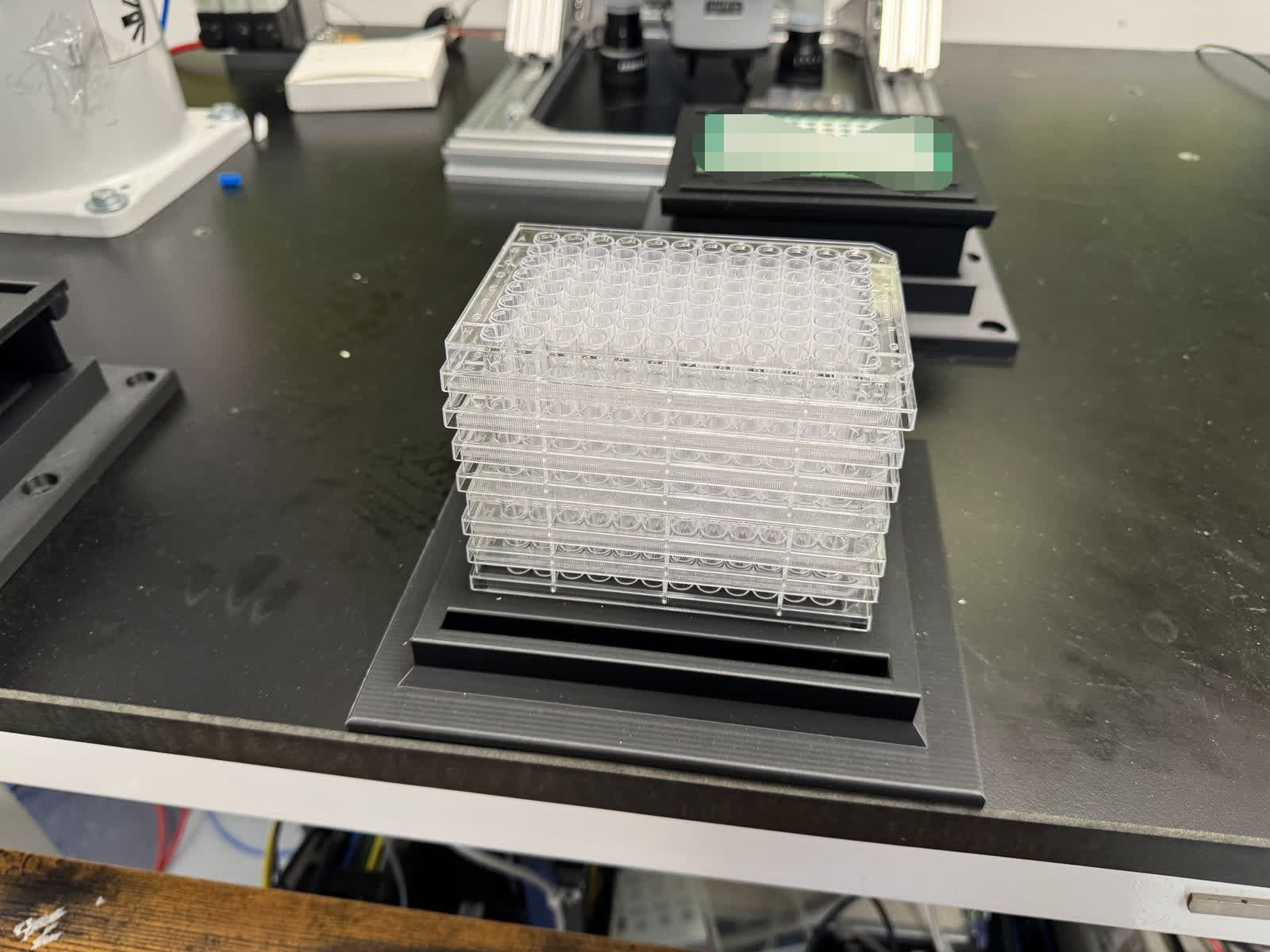
- A gripper lowers well-plates onto sensor panels held in 3D-printed fixtures that align the parts.
- Pneumatic control
- The robot's digital outputs control a 3/2-way valve block through relays. The robot program controls the clamps directly.
- Inspection
- Assembled plates are checked under a microscope at the station. The inspection software supports FAST plates.
FAST plates are a Hememics product line still in development. This station uses an Epson VT6-A901S robot to place well-plates onto sensor panels, aligning the wells with the sensing areas.
I designed the station layout and fixtures, wired the pneumatic clamps, and wrote the assembly sequence.
The parts being assembled are transparent plastic well-plates and sensor PCBs. A 3D-printed fixture holds them in alignment while the gripper lowers the plate onto the panel.
Pneumatic clamps
Pneumatic clamps hold the panel while the robot seats the plate. A block of 3/2-way valves connects through relays to the robot’s digital outputs, so no separate controller is needed.
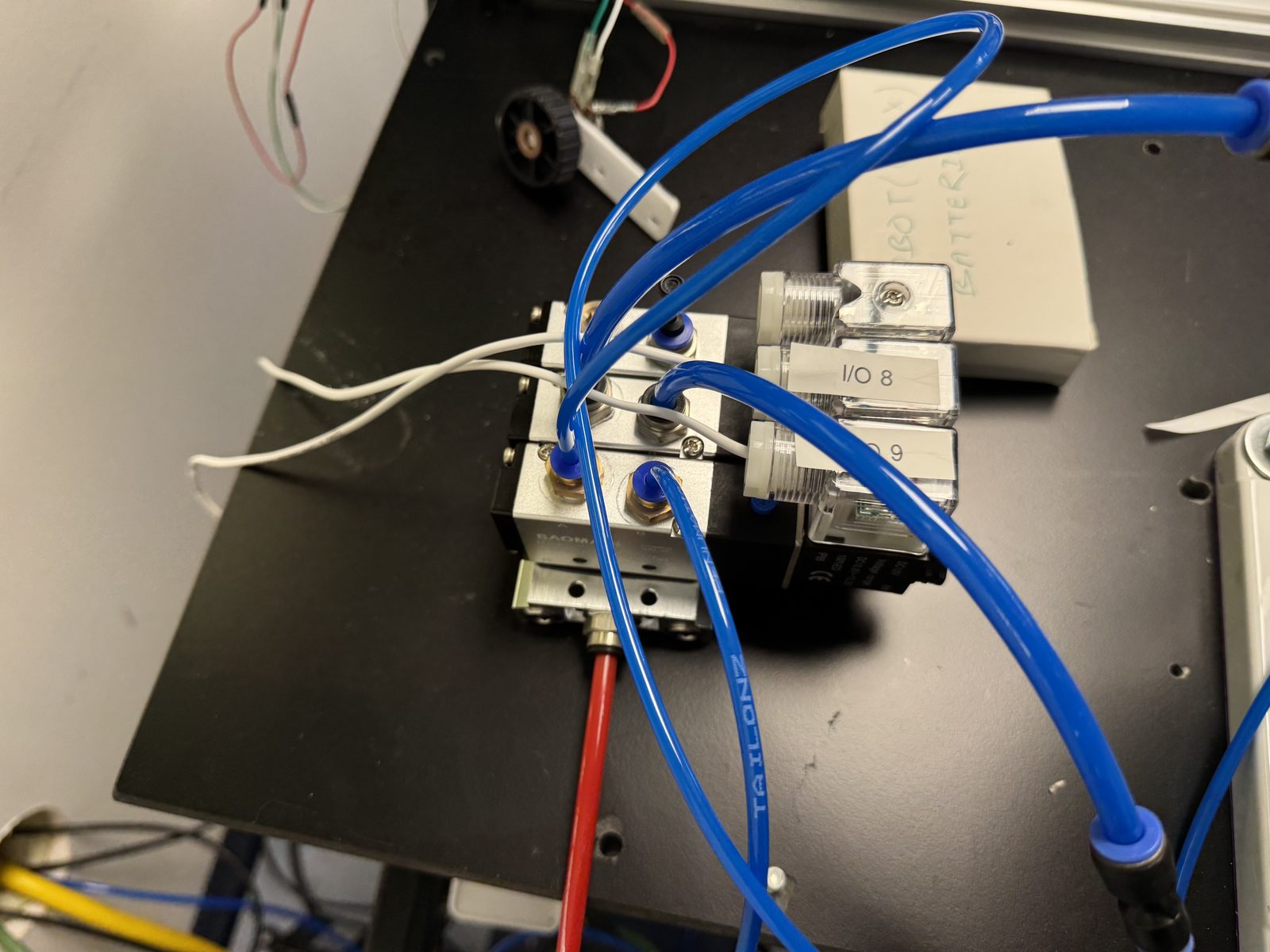
The robot program controls the clamps and gripper alongside the arm’s movements. They share an error handler, so a failed grip stops the clamping sequence.
Inspection
A microscope at the station is used to check assembled plates. Units that pass inspection retain their positions in the grid.
The software from the inspection station supports FAST plates, allowing assembled plates to use the same scan mode as bare chips.
The robot programs and assembly acceptance criteria are maintained internally.