robotic functionalization of sensor boards
- Functionalization
- Application of surface treatments that determine what each sensing area responds to.
- Protocols
- JSON definitions specify reagent locations, transfer sequences, and rules for tip use.
- Surface coverage
- Angled dispensing improves reagent coverage on hydrophobic graphene surfaces where vertical dispensing was inadequate.
- Records
- Lab personnel prepare the protocol, the robot executes it, and the run file records the steps performed.
Functionalization applies chemical treatments to a graphene board so its sensing areas respond to particular targets. The process requires consistent reagent volumes, contact times, and placement across the panel.
This work automated a process that had previously been done by hand.
Why a six-axis arm
The lab initially used Opentrons liquid handlers, which approach the board vertically. The Opentrons project covers those protocols.
Vertical dispensing gave inadequate coverage on the hydrophobic graphene surface. Droplets tended to bead up and stay where they landed.
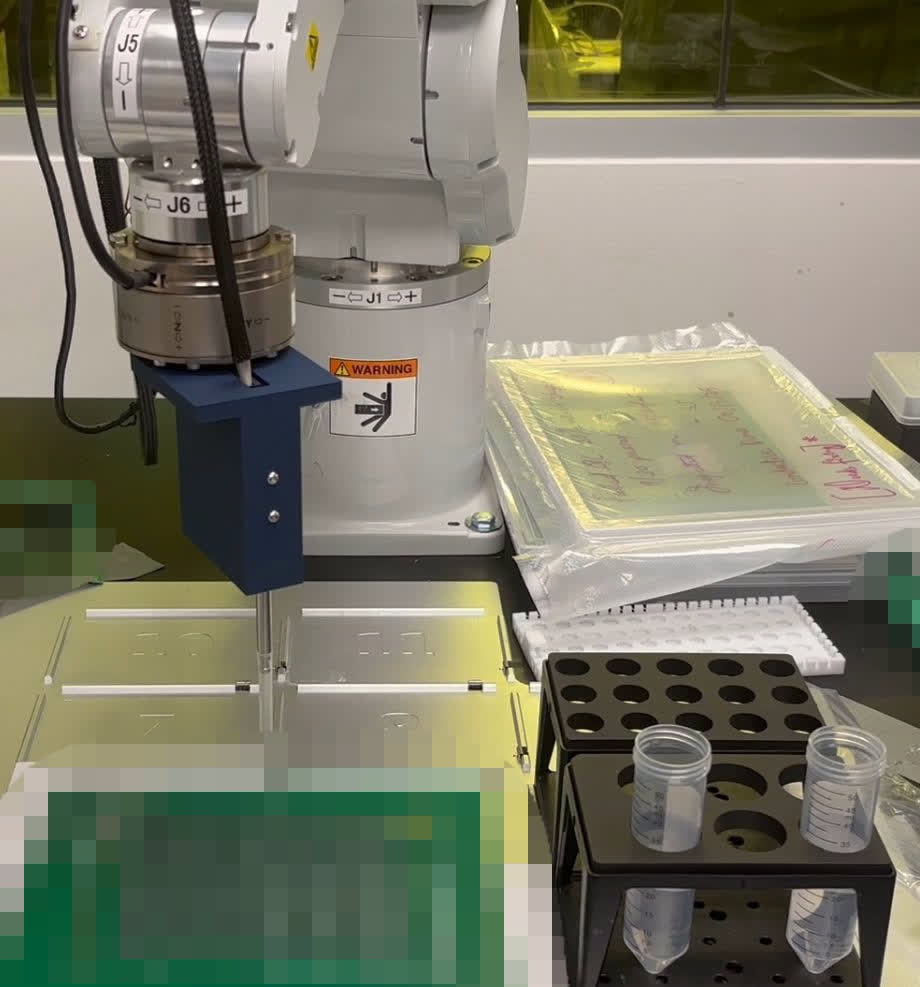
The Epson arm can change the needle’s angle as well as its position. Dispensing at an angle allowed the reagent to spread along the surface and made coverage more reliable.
Protocol setup
A JSON protocol specifies the reagents, target sensing areas, volumes, and order of application. It also defines transfer strategies for each set and rules for tip use.
The reagent rack and tube block are assigned to deck slots using
load_labware. The lab automation project
shows an example setup.
Protocol steps call Python routines to position the chip at the reader and dispense reagents across the panel. Dry-run mode validates the protocol before a physical run. Tip use is tracked and recorded for audits.
Liquid-level detection
The pipette provides a signal when the needle reaches liquid. The software supports three detection modes: polling the pipette, using an asynchronous robot task, or monitoring a hardware input. Each mode limits the maximum descent depth.
The lab automation project describes these modes in more detail. They are particularly important here because the tubes are shallow and reagent volumes are small. A collision can waste reagents and require staff time to recover.
Functionalization records
Lab personnel define functionalization steps in the experiment-authoring tool alongside the chips, samples, and reagents. The run file records what the robot did, preserving the panel’s treatment history for later analysis or troubleshooting.
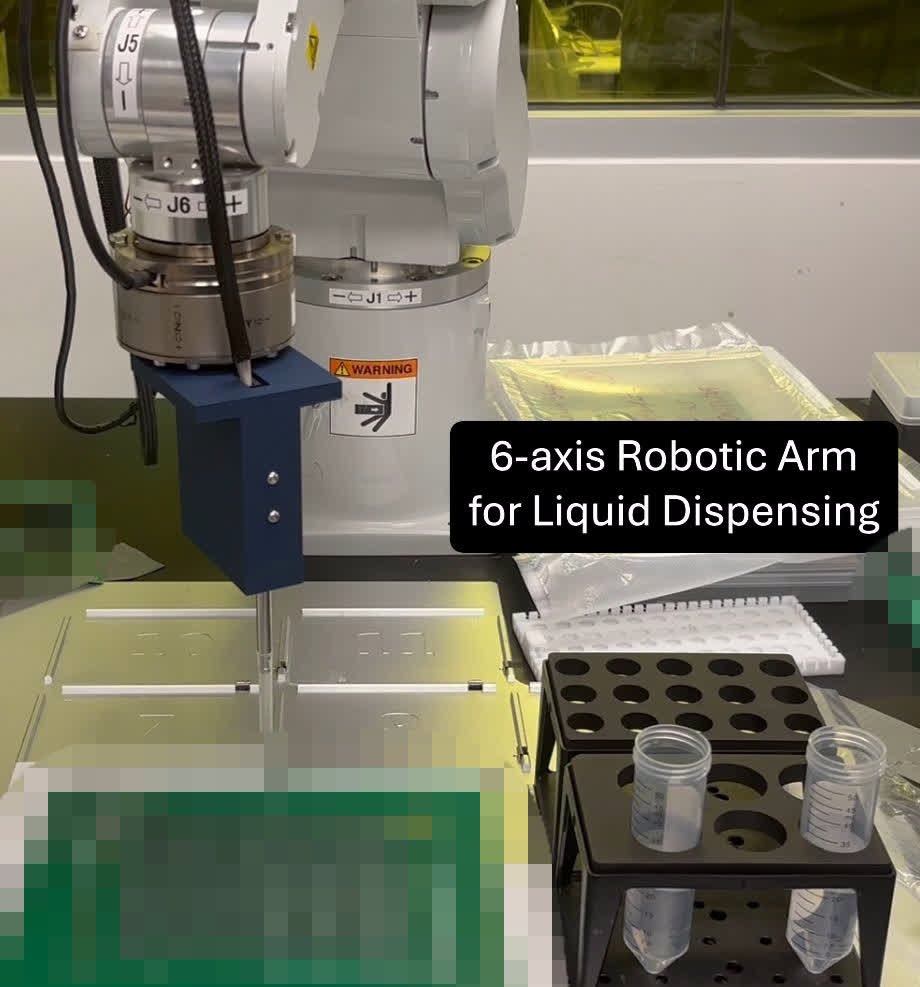
Functionalization was the arm’s first production job at Hememics. The testing, imaging, and assembly stations later used the same protocol system.