opentrons OT-2 liquid-handling protocols
- Equipment
- Two OT-2 systems used for board imaging, chip functionalization, and reagent mixing.
- Protocols
- Python scripts using the Opentrons API, with reagent volumes and measurement timing configured for HemWare acquisition.
- Later changes
- Functionalization moved to the six-axis arm for angled dispensing. The OT-2s continued other work, including board imaging for quality control.
Before the lab introduced six-axis robots, it used two Opentrons OT-2s. I wrote Python protocols for reagent mixing, board functionalization, and testing with HemWare.
The protocols accounted for tip use, liquid left in tubes, module timing, and file output for the acquisition software.
Testing and functionalization
The testing protocols mixed reagents and presented boards for measurement. Volumes and timing were configured around the reader’s acquisition sequence so HemWare could collect the curves.
The functionalization protocols converted chemistry procedures into aspiration and dispensing steps across sensor boards. These procedures later formed the basis of the JSON protocols used by the six-axis system.
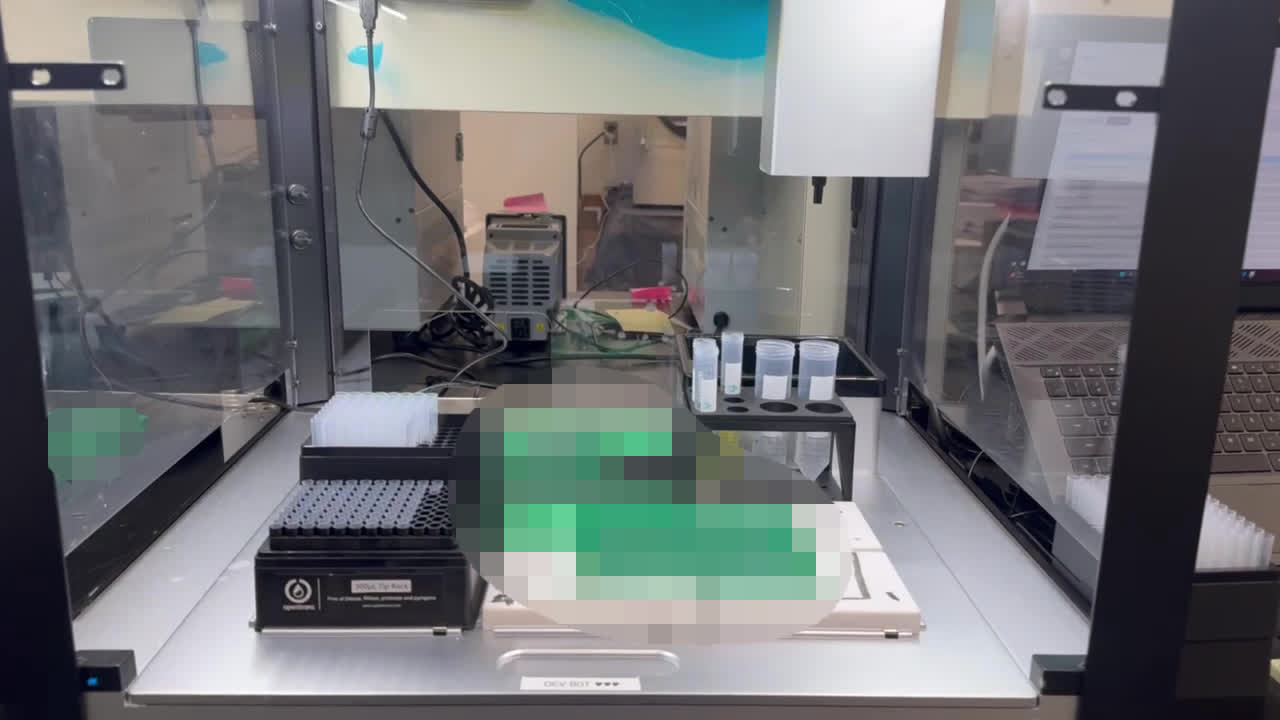
Continued use
Functionalization moved to the six-axis arm because the hydrophobic graphene surface needed angled dispensing. The functionalization project describes that change. The OT-2s continued other tasks, including board imaging for quality control.
When building the six-axis robot server’s deck model, I used the same concepts of slots, labware definitions, and well indices. This also allowed the reader to be registered as labware with a known position on the deck.